


Documentary or Philosophy Lecture?
Nathan Fielder’s new film about Elizabeth Holmes arrives with a classification problem baked in: it is, technically, a documentary, but calling it that undersells what it’s actually doing.

What the Film Is Really Asking
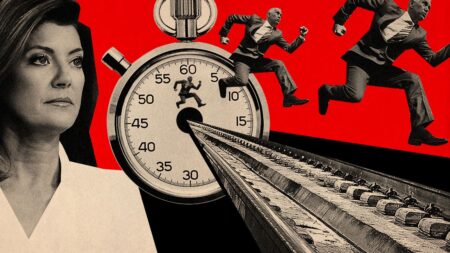
Critic Naomi Fry, writing for The New Yorker, describes the film as something closer to “a philosophical treatise on the knowability of other people” than a conventional documentary. That framing matters. The Holmes story has already been processed through podcasts, a Hulu series, and a wave of true-crime coverage that mostly treated her as a riddle with a satisfying answer – fraud, hubris, Silicon Valley pathology, take your pick. Fielder seems less interested in the verdict than in the epistemological problem underneath it: can you actually know what another person is thinking, feeling, or performing at any given moment?
That question is not unique to Holmes. It is, in a way, the animating concern of everything Fielder has made. Nathan For You built entire episodes around the gap between what people say and what they mean. The Rehearsal pushed that further, staging elaborate simulations to examine how people prepare for – and ultimately avoid – emotional reality. The Holmes film, whatever its final title, appears to extend that same line of inquiry into documentary territory, where the stakes of misreading someone are no longer comic but genuinely consequential.
There is a risk in this approach that Fielder has always navigated carefully. When you build a body of work around human opacity, you can drift toward a kind of cold detachment – watching people without ever committing to a judgment. Some viewers found The Rehearsal uncomfortable precisely because it refused to resolve. The Holmes film, by Fry’s account, carries similar DNA: it looks hard at its subject without pretending to see through her.
Holmes herself remains one of the stranger public figures of the past decade. Convicted in 2022 on four counts of fraud against investors, she built Theranos into a company valued at roughly $9 billion before its collapse. The performance she maintained throughout – the deep voice, the Steve Jobs turtlenecks, the unwavering eye contact – has been dissected so many times that it has started to calcify into mythology. Fielder, by approaching the material as a question rather than an answer, may be the first person to do something genuinely different with it.

The Nathan Fielder Method, Applied to Real Stakes
What distinguishes Fielder’s approach across his projects is a refusal to grant the audience the comfort of ironic distance. His earlier television work put him in frame alongside the people he was observing, which made the discomfort mutual. You were never entirely sure whether Fielder was the one being watched. That self-implicating quality is harder to maintain in a documentary about someone else’s crimes, and it will be interesting to see how the film handles the asymmetry – Fielder behind the camera, Holmes as subject.
Fry’s characterization of the film as a treatise on knowability points to something the true-crime genre has mostly avoided confronting directly. The genre runs on the promise of revelation: watch long enough and you will understand. Fielder appears to be making the opposite bet – that the closer you look, the less certain you become. That is a genuinely uncomfortable position to hold for two hours, and it is also, arguably, the more honest one.
Holmes is currently serving an 11-year federal prison sentence, having reported to Bryan Federal Prison Camp in Texas in May 2023. Her partner, Billy Evans, has maintained public support throughout her incarceration. The film’s production timing means Fielder was working with a subject who is, in a literal sense, no longer freely accessible – which raises its own questions about what footage exists, what access was granted, and whose cooperation shaped the final cut.
The broader cultural moment around Holmes has shifted somewhat. The initial wave of fascination – which peaked around her 2022 trial – has given way to a more ambivalent afterthought. She is neither fully rehabilitated nor entirely condemned in the public imagination. That ambiguity may be exactly the opening Fielder was looking for. A cleaner story would have been easier to tell and far less interesting to him.
Naomi Fry’s framing, “you can see everything,” doubles as both title reference and interpretive key. Seeing everything is precisely what the film seems to interrogate – whether visibility produces understanding or just the illusion of it. It’s a problem other documentary projects have sidestepped, defaulting to the assumption that more footage, more testimony, more data points eventually add up to truth.

Where This Leaves the Audience
What Fielder has built, across Nathan For You, The Rehearsal, and now this Holmes project, is less a filmography than a sustained argument about the limits of observation. Each project adds a layer of complexity to the same underlying problem: watching someone does not mean you know them, and the act of filming changes what you are watching anyway.
The question the film seems to leave open – deliberately, structurally – is whether Elizabeth Holmes knew who she was either. That’s not exculpatory. It’s just harder to resolve than a jury verdict.