




A Week When the Literary World Refused to Stay Quiet
On September 1, 1859, Harriet E. Wilson – often considered the first African American woman novelist – published Our Nig without her name on the cover. The anonymity was not accidental. It was the only available armor. That date passed this week as literary culture kept its usual restless pace: authors confessing, photographers remembering, debt figures surfacing, and booksellers wondering, out loud, whether reading itself is dying.
The range of what mattered this week refuses easy summary. Marlon James finally wrote a novel drawn from his own life and talked through what that meant with Eric Olson. Robert Kiyosaki – Rich Dad Poor Dad author and Trump associate – is apparently carrying $1.2 billion in personal debt, according to Vanity Fair. Anne Carson wrote about having a “Rosalía hangover.” All three of these things happened in the same news cycle. That is where literature lives now.
What Photographers and Memoirists Captured This Week
Beowulf Sheehan, the photographer who spent time with Cormac McCarthy, published a remembrance of what it was like to document the author through a lens. The detail that sticks: “Cormac asks what we think of the home so far, already knowing our answers.” It is the kind of line that makes you understand why McCarthy’s fiction works – the man apparently moved through life the same way his sentences do, with the answer already coiled inside the question.
Separately, The New Yorker published Emily Witt’s on-the-ground account of Operation Metro Surge in Minneapolis, which carries a passage worth reading twice: “At the height of the surge, Minneapolis resembled a place hit by a hurricane: donated groceries piled in driveways and church parking lots, waiting to be distributed to people afraid to leave their houses; citizens wearing safety vests and whistles standing in groups outside local businesses and schools.” The writing does what the best reported pieces do – it makes an abstraction into a specific smell and weight.
Also on the personal end: Nick Ripatrazone reported from the high school where he actually teaches, writing for Slate about what the first days of the phone ban era look like from inside a classroom. It is one thing to argue policy from the outside; it is another to be the adult in the room watching teenagers rediscover boredom.
Debt, Gamification, and the Comics Journal
Robert Kiyosaki’s $1.2 billion debt figure deserves a moment of stillness. Rich Dad Poor Dad, the book he wrote with Sharon Lechter, sold tens of millions of copies on the argument that financial literacy separates the wealthy from everyone else. That the author is now, by Vanity Fair‘s accounting, $1.2 billion in the red does not automatically invalidate every page – but it does ask something of the reader who spent years treating the book as a manual.
Aeon ran two pieces worth flagging. One made the case for why humanity should choose play over gamification – a distinction that sounds small until you realize gamification has colonized everything from fitness apps to classroom reading programs. The other revisited the time Hans Christian Andersen showed up uninvited at Charles Dickens’s house and proceeded to overstay his welcome on the lawn, a historical episode that is either charming or horrifying depending on how you feel about houseguests.
Vertigo, Vonnegut, and the Weight of Literary History
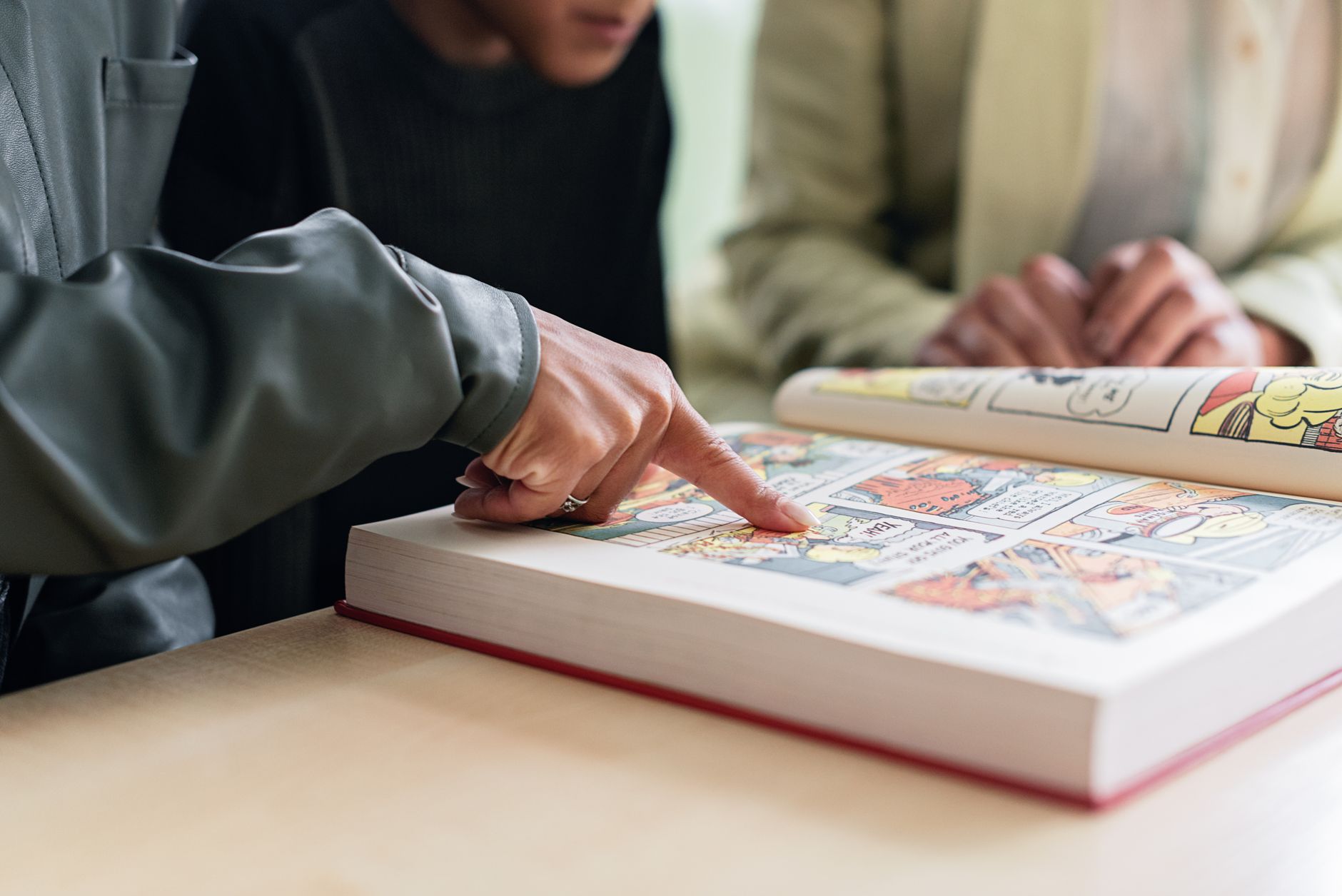
Tegan O’Neil’s examination of Vertigo – the DC Comics imprint that launched Sandman, Preacher, Transmetropolitan, and several other titles that aged into canonical status – ran in The Comics Journal this week with a characteristically sharp opening: “There is no reason whatsoever for there to be so many megalomaniacal comic book writers in this world. One is a problem, two is a trend, and friend: there are more than two.” It is the kind of cultural criticism that earns its conclusions.
At Lit Hub, the week’s biographical writing focused on Kurt Vonnegut’s Dresden and what Slaughterhouse-Five actually got right and wrong about Nazi methods: “Terror wasn’t the only weapon the Nazis used against the American prisoners. Sometimes, they used propagandistic persuasion as well.” The distinction matters because Vonnegut’s novel tends to get read as a book about violence, when it is equally a book about manipulation and the stories captors tell their captives.
Matthew Wills wrote at JSTOR Daily about the Jewish Labor Bund – described as “secular, socialist, and ‘uncompromisingly anti-Zionist'” – exploring what that movement’s legacy looks like now, in a political moment that has made every historical position feel newly charged. Robert Rubsam, writing at The Baffler, took on Matsuo Bashō and what his walking journeys have to say about poetry as physical practice rather than desk work. Maris Kreizman, also at Lit Hub, pointed readers toward books that push weird girl literature beyond its current ceiling.
Hannah Gais wrote for The Baffler about the rise and fall of Hampshire College – a piece framed against what Gais describes as a broader crisis for American universities. Hampshire, founded in 1970 without formal grades or traditional departments, has functioned as a kind of test case for what experimental higher education can and cannot survive. The question of what it means for the institution to have faltered sits differently depending on whether you think the experiment failed or the funding environment did.
Is Reading Ending? Booksellers Weigh In
Joel Pinckney, writing at Defector, asked booksellers directly: do they think this is the end of reading? The piece does not offer a clean answer, which is probably the honest one. New York City also moved this week to place limits on AI use in classrooms, reported by The Verge, which sits next to the Defector piece in an uneasy way – the two biggest anxieties about what students are and are not doing with their minds, arriving in the same week.

Hanif Abdurraqib, writing for The New Yorker, published an ode to the group chat – “that has, in a way, become its own neighborhood, its own universe.” Abdurraqib writing about digital intimacy is never quite what you expect, and this piece appears to be in that tradition. Cal Biruk’s look at recent birding books in Public Books described the hobby’s “future oriented” nature, which is either hopeful or ironic depending on what you think the future of outdoor spaces looks like. Ray Reipen’s story – how he launched an iconic rock club and built Boston’s sonic counterculture – ran at The MIT Press Reader.
Also circulating at Lit Hub this week: writing on J.P. Donleavy’s The Ginger Man and the fight to get it published, a piece on the carbon footprint of live rock concerts, Nick Offerman and Gary Lovely on aspiring to Wendell Berry’s standard of living, the tumultuous private life of Pakistan’s founder, and Edmond Albius – the enslaved man who pioneered the technique for cultivating vanilla. That last piece is the kind of history that gets buried and keeps needing to be found again. Albius developed his hand-pollination method on Réunion Island in 1841, at age twelve. The vanilla industry built on his discovery generated fortunes that did not reach him.