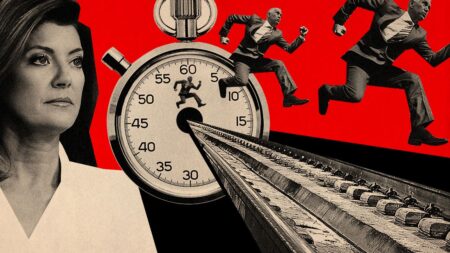





When Looking Becomes Something Else
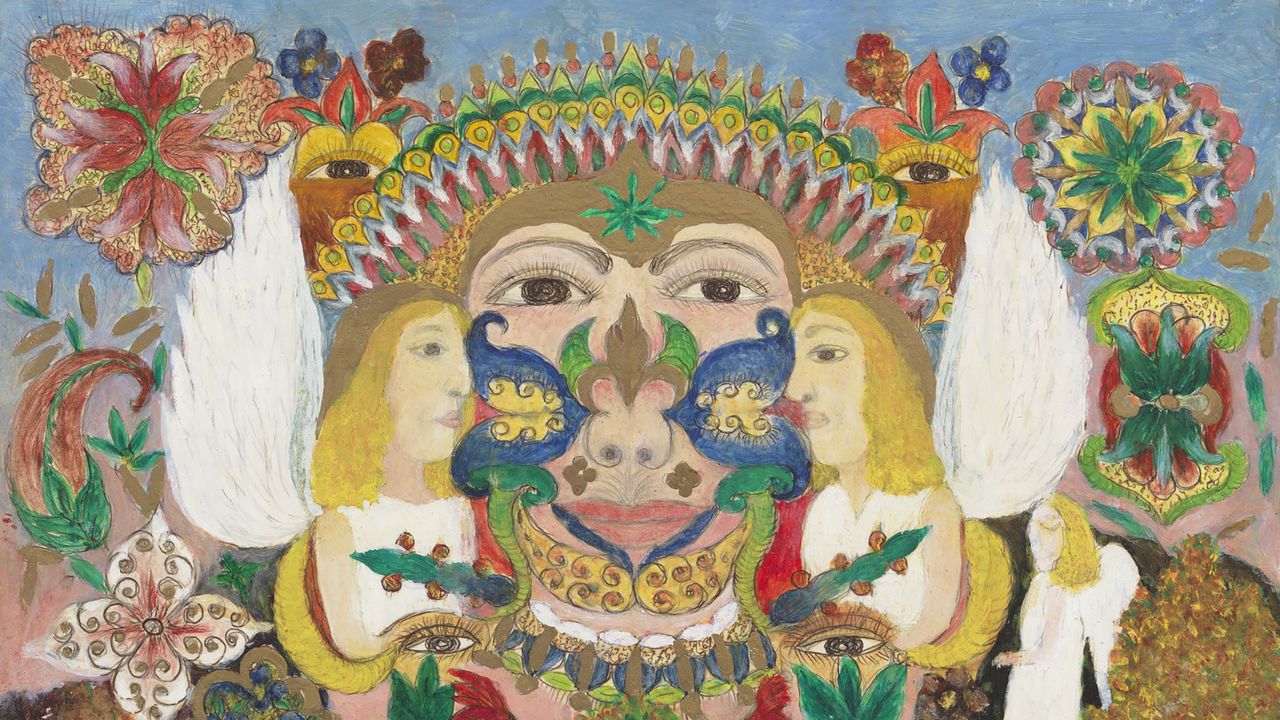
There is a specific kind of exhaustion that comes from standing in front of Minnie Evans’s work – not the fatigue of boredom, but the opposite. Her paintings press so much into their borders that the eye, after a while, simply stops performing its usual function. It quits sorting, cataloguing, labeling. At the Whitney’s new exhibition, that moment of surrender arrives faster than expected, and what follows it is harder to name.
Evans’s dense visual worlds do not open up so much as they absorb. The longer you stand with one of her pieces, the less it feels like an act of looking and the more it resembles something closer to submersion. That is not a metaphor borrowed from an art critic – it is the plain mechanical experience of encountering her imagery in person, where scale and accumulation do work that reproductions simply cannot replicate.
A Painter Who Built Worlds Without Permission
Evans spent decades making art that existed almost entirely outside the institutions that were deciding, at the very same time, what American art was supposed to look like. She worked from a place of deep spiritual compulsion – her imagery pulling from dreams, from religious vision, from a visual vocabulary that owed nothing to the movements happening in galleries and schools around her. That independence, which might have kept her permanently invisible, has become the thing that makes her feel so strange and so necessary now.
The Whitney’s decision to give Evans serious exhibition space is not a corrective footnote – it positions her as someone whose work holds up against sustained attention in a major institution, not merely as a figure deserving belated recognition. There is a difference between being included and being shown to full effect, and the exhibition appears to understand that difference. Her paintings are not arranged as historical artifacts. They are arranged as live objects, things that still act on you.
What makes Evans so difficult to place, even now, is that her influences refuse to stay still. You can find traces of Outsider Art frameworks around her name, and those frameworks are not entirely wrong, but they are not sufficient either. She was a Black woman artist working in North Carolina across much of the twentieth century, and the full context of that – geographic, racial, economic, spiritual – shapes what she made in ways that single-category labels tend to flatten rather than illuminate. The Whitney’s framing will matter considerably in how her work gets absorbed into the broader conversation, and how easily that conversation then moves on.
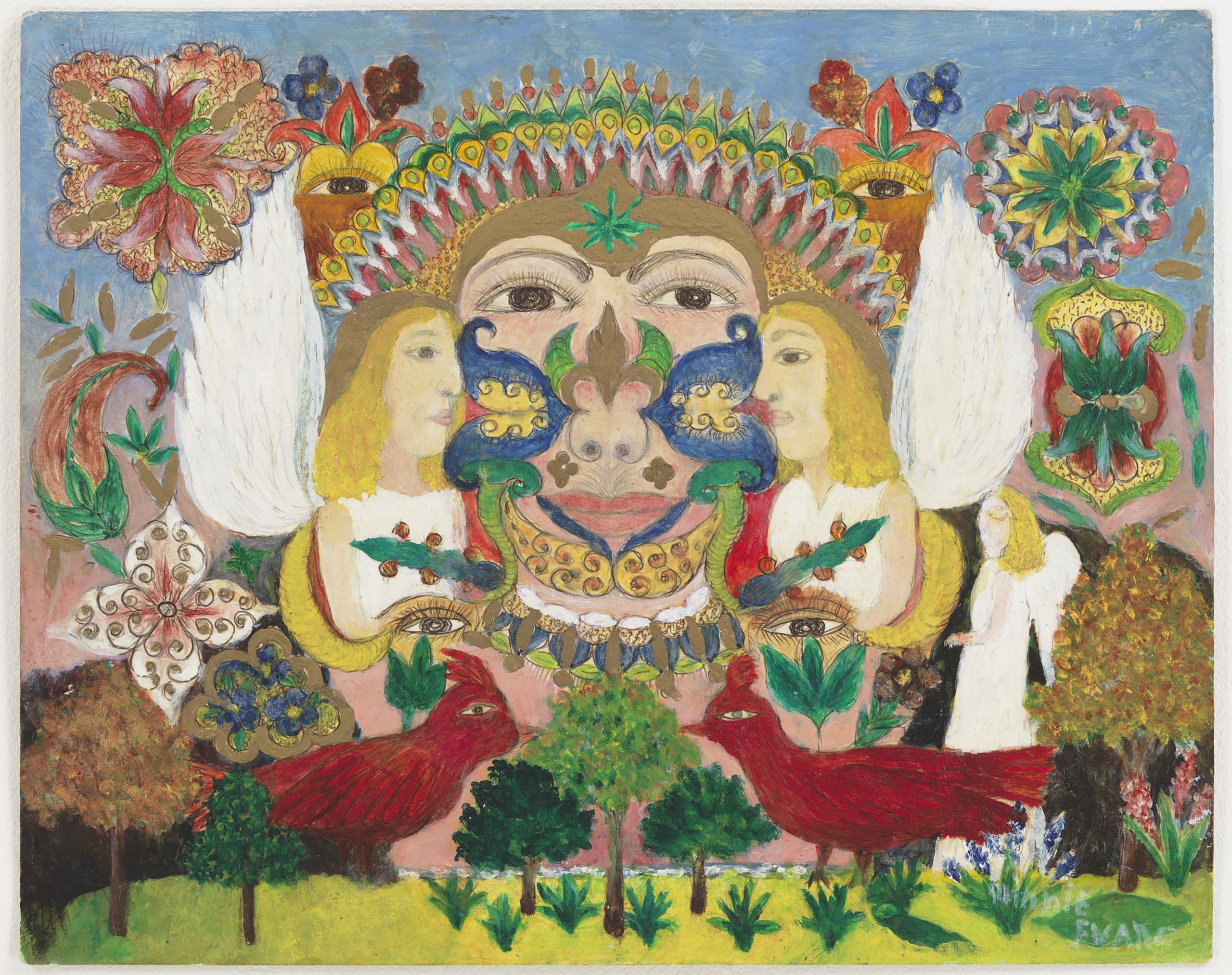
Her imagery is floral and figural and densely symmetrical, organized by an internal logic that feels both entirely deliberate and entirely unbound by conventional compositional rules. Faces emerge from foliage. Eyes appear where you do not expect them. Color decisions that should clash instead accumulate into something that reads as coherent, even inevitable, once your own expectations have been sufficiently loosened. That loosening takes time, and it is not comfortable.
Evans began drawing seriously in the 1930s, reportedly after experiencing visions she felt compelled to record. For years, she worked as a gatekeeper at Airlie Gardens in Wilmington, North Carolina, and it was there that much of her later work was created and first encountered by visitors. The garden setting – the daily immersion in organic form, in growth cycles, in the theatrical scale of nature – seems inseparable from the visual density she brought to every surface she worked on. Her biography does not explain her art, but it does make certain textures feel less surprising.
Recognition came in fragments and from unusual directions. Her work eventually reached collectors, critics, and curators who understood that what she was doing could not be easily dismissed. By the time she died in 1987, there was enough institutional acknowledgment to make her legacy feel secured – and yet the Whitney exhibition suggests that secured is not the same as fully reckoned with. There is still work to do in understanding what her paintings actually are, not just what category to file them under.
The Eye Eventually Gives Up, and That Is the Point
The New Yorker’s framing of the Whitney show centers on a specific experiential claim: that there arrives a moment, in front of Evans’s work, when the eye stops decoding and the mind begins to surrender. That is a precise description of something real. Evans’s compositions are so loaded with visual incident that the brain’s pattern-recognition machinery eventually hits a kind of limit – and once it does, the paintings begin to function differently. Less like images to be parsed, more like environments to be inhabited.
That shift – from decoding to something more passive and more total – is not accidental. It is, arguably, the entire project.
What the Whitney Visit Actually Costs You
Seeing work like Evans’s in person requires something that most gallery visits do not demand: the willingness to stop moving. The architecture of contemporary museum-going encourages a particular pace – enough time per piece to feel you have engaged, not so much that you fall behind whatever internal schedule you arrived with. Evans punishes that pace. Her paintings need duration. They need the visitor to stay until the first layer of interpretation has been exhausted, because what happens after that exhaustion is the actual content.
This is also what makes writing about her difficult. Language wants to decode. Criticism wants to name what it sees and then move through the naming toward argument. Evans’s work resists that motion. It is not that her imagery is chaotic or random – it is highly ordered, intensely controlled – but its logic operates below the level where descriptive language tends to be useful. You can note that her palette is unusual. You can observe that her symmetry is strict. Neither observation gets very close to why standing in a room with her paintings feels like a change in atmospheric pressure.
The Whitney show arrives at a moment when the institutional appetite for artists who were overlooked during their lifetimes is intense enough that exhibition announcements can function almost as gestures of moral accounting. Evans deserves more than that, and the question the exhibition will have to answer – painting by painting, room by room – is whether the institution has made space for the genuine difficulty of her work, or whether it has simply made space.