




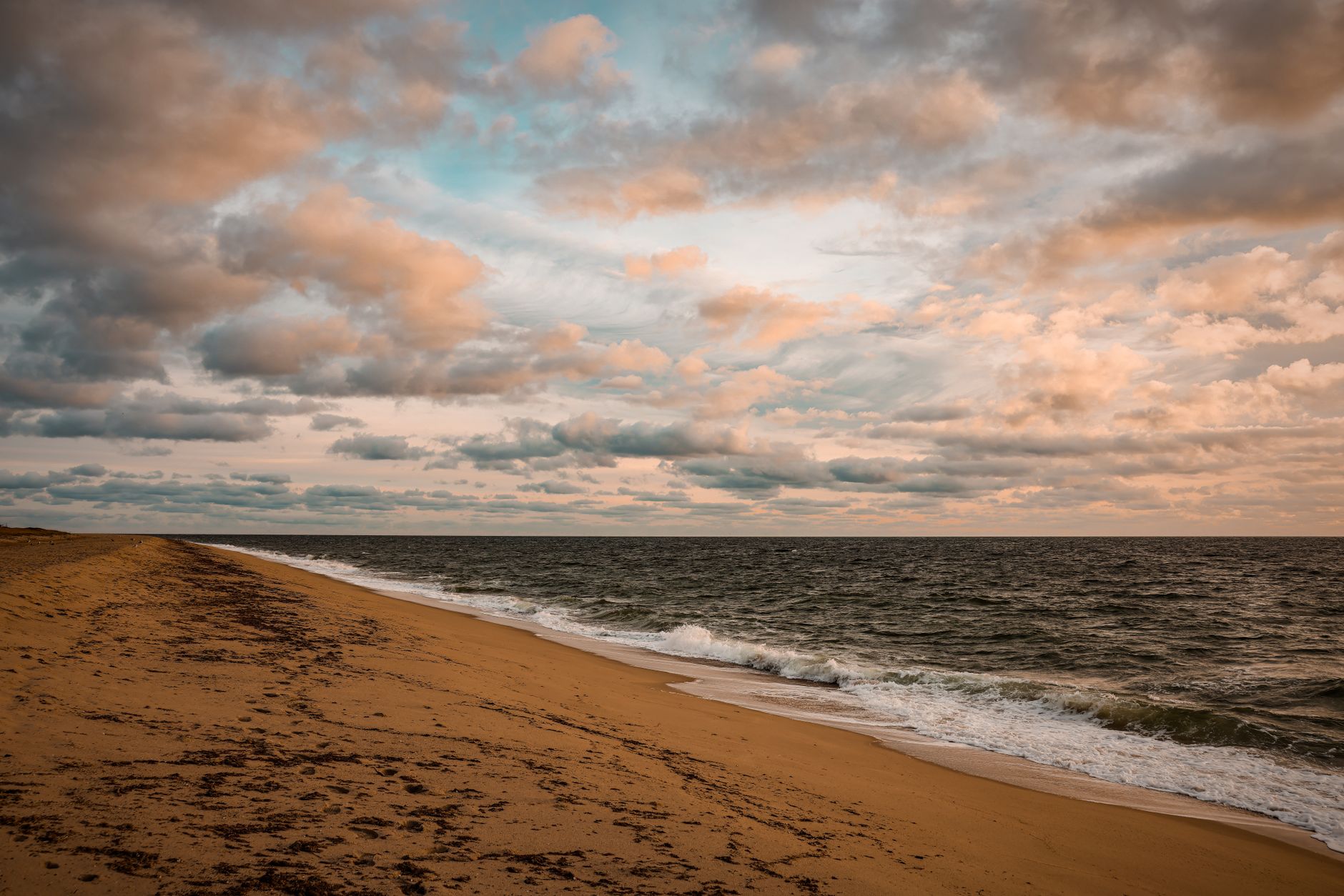
Richard Russo and his wife, Barbara, usually go to Martha’s Vineyard in September, when the ocean is still warm and the summer crowds have gone home. This year they went for two weeks in June instead. His new novel, Under the Falls, was due out in mid-summer, and nobody knew how long the tour would run. September might not happen at all. June also had a practical advantage: he could take the inter-island ferry to the Nantucket Book Festival and see some writer friends.
The itinerary kept changing, which is how these things go. First he would arrive early on the festival’s opening morning, sit in on as many sessions as he could, and ferry back that evening. Then that seemed too tight, and it made more sense to stay over and return the next day. Barbara had no wish to come, and he didn’t blame her. She had toured with him the previous summer for Life and Art, his essay collection, and she would be on the road with him again for Under the Falls. After four decades of books and tours, she can recite his Q&A answers before he gives them. A night off seemed like the least he could offer. That night, in bed, he felt anxious.
Sanity, Diagnosed in Advance
The anxiety wasn’t new. It had been building for some time, and Russo had a ready explanation: it was sanity. He lists the evidence plainly. A malignant narcissist in the White House. His war in Iran. Global warming. The chance of another pandemic. Artificial intelligence being built at breakneck speed by tech executives who admit it could cause an extinction event within a decade. Anyone not anxious, the logic goes, isn’t paying attention.
It is a good argument, and he knows it. Then he turns on it, because he can’t tell whether it’s an observation or an alibi. A diagnosis that flatters you is the easiest kind to accept, and he lets the question sit: were his fears a reasonable response to the world, or a story he told himself so he wouldn’t look closer?
The evidence for the second reading shows up in the same bed, in the dark. He found himself seriously weighing whether to ask Barbara to come along after all, or to skip the trip. He even drafted excuses in his head. He could email the festival and claim the flu. He could say a Lone Star tick had bitten him, an ailment the Vineyard was just then becoming known for. Both were exits that looked respectable on paper.
A Novelist Who Doesn’t Lie
He rejected both, and the reason he gives is a good line: he’s a novelist, he makes things up all the time, but he is not a liar. The distinction is carefully drawn. Invention, for a writer, is a trade with rules of its own. A fake flu sent to real people is something else. “Man up,” he told himself, and went to sleep.
It didn’t hold. He woke in the middle of the night in what he calls a blind panic, shaking and unable to control his limbs.
The Ferry That Wouldn’t Come Back
When Barbara asked what was wrong, he told her what his mind had assembled: if he went to Nantucket, he might never see her again. In this version the return ferry the next morning would be canceled. He would have to take another boat, perhaps the one to Hyannis, then work his way back up the Cape to Woods Hole and cross over to the Vineyard. By the time he got there, she might not be there anymore.
The fear is absurd, but it isn’t random. It is built entirely from logistics: ferry lines, a named port, a route up the Cape. The panic did not show up as a monster. It showed up as a travel itinerary that kept going wrong. Anyone who has planned a trip around a ferry timetable will recognize the way a small scheduling risk can swell into a catastrophe in the middle of the night.
Russo calls these fears “beyond batshit,” and it still took him a good hour or more to calm down. Two things helped. Saying the terrors out loud made them sound lunatic even to him, and the sunrise took away much of what remained. By the time he boarded the ferry to Nantucket, he had gotten ahold of himself. He would be fine.
The ferry ran, the festival went ahead, and he came back the following day. The panic was gone. The question it raised was not.
Out of the Blue, Except Not
Back on the Vineyard, he told Barbara the part that confused him. The panic attack, he said, had come out of the blue. Then he began another sentence, “It felt like—”, and let it trail off. He remembers why. What he was about to say was sort of true, but not the whole truth and nothing but.
The true part was simple: this was his first panic attack. The part he held back was harder to say. It felt like chickens coming home to roost at last. That he hadn’t seen it coming didn’t mean he shouldn’t have.
That sentence is where the essay turns. Russo has spent the opening describing an event with no warning, and he now withdraws the claim. If the attack felt like a delayed arrival, something must have been on its way for a long time. The second section of the essay, which begins with a single sentence about obsessive compulsive disorder, answers that. OCD, he writes, cuts a wide swath through his family, and his maternal grandmother suffered terribly from it. The excerpt available here stops mid-word on that sentence, so how he traces the line from her to that bed on the Vineyard is left to the full piece on Lit Hub.

The setup is enough to see how the essay works. He starts with a tourist’s calendar, widens to the news cycle, and lands on a family history he had apparently been avoiding. The jokes and the profanity are real, but they work as cover. In the opening pages he is arguing against his own best defense: the idea that being afraid in 2026 is simply what an informed person does. Sometimes it is. Russo’s point, so far as the excerpt carries it, is that it can be true and still not be the explanation.
He has a book coming out and a tour ahead, and Barbara will be on the road with him. If the first panic attack came from somewhere older than the news, what else has he been explaining away?